Williamstown Builders: Your Complete Guide to Building in 3016
Williamstown is one of Melbourne's most tightly held coastal suburbs – and one of its most complex to build in. Hobsons Bay Council, heritage overlays, coastal setbacks, and a premium market all shape what you can build and what it costs. This guide covers everything you need to know about building in 3016, from council requirements to realistic budgets, based on projects we've completed in Williamstown and the surrounding bay suburbs.
What Makes Building in Williamstown Different?
Williamstown's building environment is defined by Hobsons Bay City Council jurisdiction, extensive heritage overlay coverage, coastal proximity considerations, and a premium property market where quality builds are justified by strong end values. It's more complex than most Melbourne suburbs – and requires a builder who knows it.
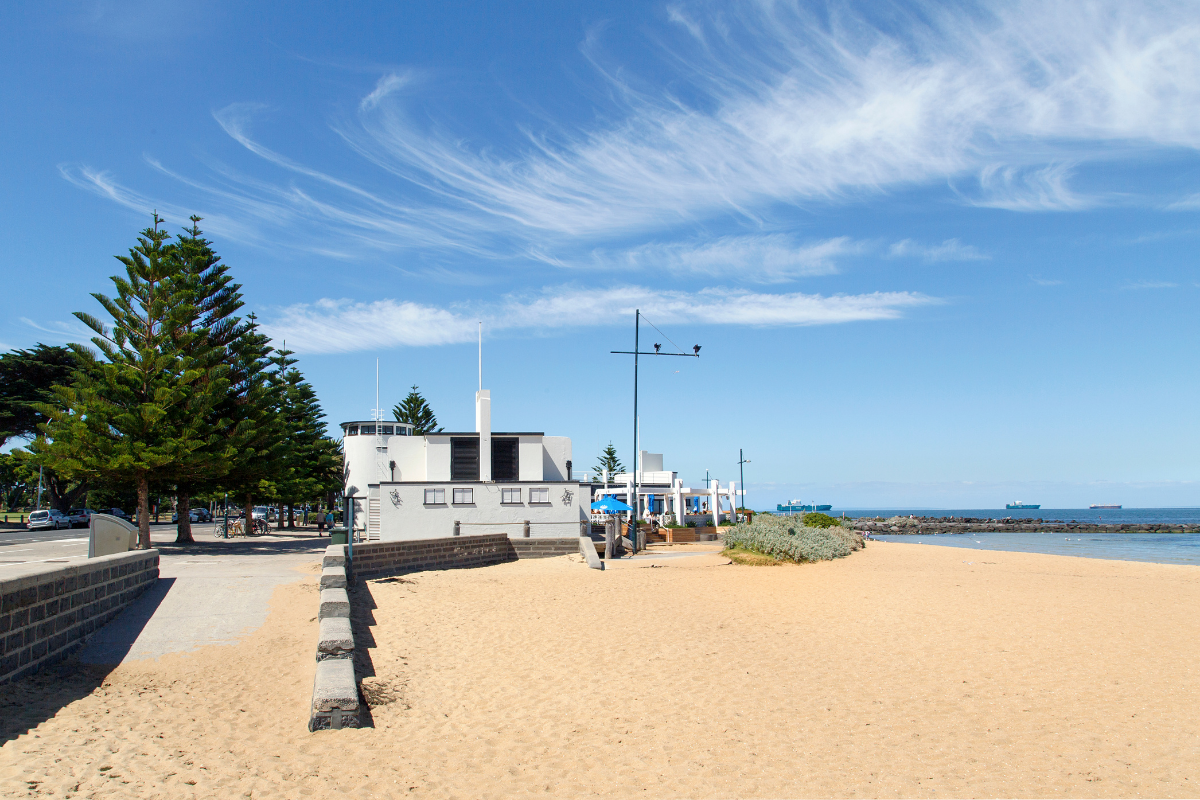
Williamstown sits 14km southwest of Melbourne's CBD on the edge of Port Phillip Bay. It's a suburb of Victorian-era terraces, converted warehouses, Norfolk Island pines, and waterfront reserves. Median house prices regularly exceed $1.4M, and the buyer profile skews toward families and professionals who want quality, character, and lifestyle.
That premium market creates opportunity. End values support higher build budgets and better finishes. A well-executed knockdown rebuild or townhouse development in Williamstown commands prices that justify the additional complexity.
But that complexity is real. Heritage overlays cover significant portions of the suburb. Hobsons Bay Council applies different planning standards to Maribyrnong Council, which covers our Yarraville base. Coastal proximity affects materials, design, and in some cases, planning overlays.
We've built across Williamstown, Newport, and Altona over the past decade. Here's what we've learned.
Hobsons Bay Council: Planning Requirements for Williamstown
Hobsons Bay City Council governs Williamstown under the Hobsons Bay Planning Scheme. Most residential land sits in General Residential Zone (GRZ) or Neighbourhood Residential Zone (NRZ), with Heritage Overlay (HO) applying across large parts of the suburb. Planning permits are typically required for any significant development.
Planning Zones in Williamstown
General Residential Zone (GRZ): Applies to most of Williamstown's residential streets. Allows single dwellings as of right (no planning permit needed for most single-home replacements), dual occupancy and townhouses by planning permit.
Neighbourhood Residential Zone (NRZ): Applies to parts of Williamstown with stricter development controls. Maximum two dwellings per lot in some NRZ precincts, limiting multi-unit development potential.
Mixed Use Zone (MUZ): Applies along parts of Nelson Place and some commercial interfaces. Different rules for residential and mixed-use development.
Confirming your specific zone before committing to a site is non-negotiable. Two blocks on the same street can sit in different zones.
Heritage Overlays: The Big Variable
Heritage Overlay (HO) coverage in Williamstown is extensive. The suburb contains one of Melbourne's largest concentrations of Victorian-era buildings, and Hobsons Bay Council takes heritage protection seriously.
What heritage overlay means in practice:
Heritage overlay doesn't prevent development – it shapes it. Hobsons Bay Council requires that new development within heritage overlay areas respects the existing streetscape, scale, and character of surrounding buildings.
What typically triggers a planning permit under heritage overlay:
- Demolition of an existing dwelling
- Significant external alterations
- New construction that affects heritage street presentation
- Extensions that change roofline or frontage character
What heritage overlay doesn't prevent:
- Knockdown rebuild (with appropriate planning permit and sympathetic design)
- Modern interior fit-out
- Rear extensions invisible from the street
- Contemporary design that respects scale and setback
We've navigated heritage planning permits in Williamstown multiple times. The key is understanding what Hobsons Bay planners actually want to see – and designing to meet that before lodging, not after.
For broader context on navigating council overlays across Melbourne's inner west and bay suburbs, see our inner west builder guide.
ResCode Standards in Williamstown
All Williamstown builds must comply with ResCode (Victoria's residential development standards):
Front setbacks: Match existing streetscape, typically 4-8m depending on street character
Side setbacks: 1-2m minimum depending on building height and zone
Rear setbacks: 4-6m for single storey, more for two-storey elements
Height: Generally 9m maximum for residential; heritage overlay areas may apply stricter limits
Site coverage: Maximum 60% for single dwellings
Overshadowing: The unshadowed portion of a neighbour's private open space must stay above 50% (or 25 square metres, whichever is less) for at least five hours between 9am and 3pm on 22 September
Car parking: 1 space per dwelling for single homes; multi-unit requirements vary by dwelling size and proximity to public transport
Williamstown's proximity to Williamstown Station and local bus routes can reduce parking requirements for some multi-unit developments – worth understanding for feasibility.
Coastal Building Considerations in Williamstown
Coastal proximity in Williamstown creates design and materials considerations around salt air corrosion, wind exposure, and in some locations, coastal inundation overlays. These don't prevent building but affect specification choices and in some cases planning requirements.
Salt Air and Corrosion
Williamstown's bay-facing streets experience salt air exposure that accelerates corrosion in exposed metals. This affects material selection for roofing, cladding, fixings, and exposed steel elements.
Specification adjustments for coastal Williamstown:
Roofing: Colorbond rated for marine environments (AZ200 substrate minimum), or zincalume with appropriate coastal coating
Fixings and fasteners: Grade 316 stainless steel throughout, not standard galvanised
Window frames: Powder-coated aluminium with marine-grade coating, or timber with quality paint system; standard aluminium frames corrode faster within 1km of the bay
External cladding: Fibre cement, brick, and render perform well; exposed steel cladding requires marine-grade coating systems
Exposed metalwork (balustrades, pergolas): Powder-coated marine grade or marine-grade stainless throughout
These aren't optional upgrades on bay-facing Williamstown sites – they're maintenance and longevity decisions. Skimping on coastal specification means expensive rectification within 5-10 years.
Coastal Inundation and Flood Overlays
Parts of Williamstown, particularly lower-lying areas near the foreshore, carry Land Subject to Inundation Overlay (LSIO) or Special Building Overlay (SBO). These overlays require floor levels to be set above calculated flood levels, which can affect design and cost.
Practical impacts:
- Slab levels set higher than standard (adds $8,000-$18,000)
- Subfloor drainage requirements
- Some sites may require Melbourne Water referral during planning
Check your specific site for inundation overlays through the Hobsons Bay Planning Scheme before purchasing or committing to design.
Popular Build Types in Williamstown
Knockdown rebuilds are the most common Williamstown project, replacing older dwellings on premium blocks with quality custom homes. Multi-unit development is possible but constrained by heritage overlays and NRZ zoning in parts of the suburb. Premium custom homes command the strongest end values.
Knockdown Rebuild
The most common Williamstown project type. Older Californian bungalows, post-war brick homes, and tired weatherboard cottages on 450-600sqm blocks make way for quality custom homes that reflect the suburb's premium positioning.
Why knockdown rebuild makes sense in Williamstown:
- Land values ($1.2M-$2M+ for typical residential blocks) justify quality construction
- Modern homes with proper insulation, energy efficiency, and contemporary floor plans
- Design tailored to coastal lifestyle – views, outdoor living, natural light
- Strong end values ($2M-$3.5M+ for quality custom homes in good streets)
Typical knockdown rebuild costs in Williamstown: $950,000-$1,350,000 total for a quality custom home
For detailed cost breakdowns, see our guide to knockdown rebuild costs in Melbourne.
Custom Homes on Vacant Land
Rare – Williamstown is essentially built out. When vacant blocks appear (from subdivision or demolition), they attract significant attention and premium prices. Clean-slate design opportunity for buyers who secure one.
Townhouse Development
Possible but constrained. NRZ zoning limits development in parts of the suburb, and heritage overlays add planning complexity. Larger blocks (550sqm+) in GRZ areas without significant heritage constraints offer the best development potential.
Where townhouse development works in Williamstown:
- Ferguson Street and Ann Street corridors (GRZ, fewer heritage constraints)
- Larger blocks near Williamstown North
- Sites away from the historic core near Nelson Place and Cole Street
Where it's difficult:
- The historic centre around Nelson Place
- Streets with intact Victorian/Edwardian streetscapes
- Blocks in NRZ precincts
For detailed townhouse development costs and feasibility, see our guide to townhouse building costs in Melbourne.
Dual Occupancy
Possible on larger blocks with appropriate frontage. Hobsons Bay Council requires minimum 14m frontage for most dual occupancy configurations. The same heritage and zoning constraints that affect townhouses apply here.
See our article on duplex building costs in Melbourne for detailed pricing on dual occupancy projects.
Williamstown Block Characteristics
Williamstown residential blocks typically run 400-600sqm with frontages of 10-15m. Victorian-era blocks near the waterfront are often narrower and irregular. Larger blocks exist in the Ferguson Street corridor and Williamstown North. Site conditions vary significantly with proximity to the bay.
Typical Block Sizes
Historic core (Nelson Place precinct, Cole Street area): 300-450sqm, narrow frontages (8-12m), irregular shapes from 19th century subdivision patterns
Main residential streets (Ferguson Street, Electra Street, Ann Street): 400-550sqm, frontages 12-15m, more regular
Williamstown North (toward Newport): 450-650sqm, more regular, fewer heritage constraints
Corner blocks: Higher development potential where zoning permits; sought-after for orientation and dual-frontage options
Site Challenges Specific to Williamstown
Soil conditions: Parts of Williamstown – particularly areas reclaimed from the bay or near former industrial land – have variable soil conditions. Soil testing is essential before design. Poor soil adds $15,000-$40,000 in foundation costs.
Narrow street access: Some historic Williamstown streets have limited width, requiring careful planning for construction access and material delivery.
Underground services: Older areas have aging infrastructure. Service upgrades beyond simple connections are common, adding $10,000-$25,000 in some cases.
Vegetation protection: Mature Norfolk Island pines and other significant trees are protected. Council won't approve removal without strong justification. Factor tree root zones into design.
Building Costs in Williamstown
Williamstown construction costs run $3,000-$3,800 per square metre for quality custom homes in 2026 – among the higher end of Melbourne's western suburbs. Premium location, coastal specifications, heritage considerations, and access constraints all contribute to higher build costs compared to inner west or outer suburban sites.
Construction Cost Ranges
Custom home, standard specification: $3,000-$3,400 per sqm
Custom home, premium specification: $3,400-$3,800 per sqm
Townhouses (where feasible): $2,800-$3,400 per sqm
Major renovation: $2,000-$2,800 per sqm
Total Project Cost Examples
250sqm custom home, quality specification:
Construction: $750,000-$850,000
Professional fees (architect, engineer, planner): $55,000-$80,000
Council fees and services: $20,000-$35,000
Demolition: $22,000-$40,000
Landscaping: $35,000-$60,000
Total: $882,000-$1,065,000
300sqm premium custom home:
Construction: $1,020,000-$1,140,000
Professional fees: $65,000-$95,000
Council fees and services: $25,000-$40,000
Demolition: $22,000-$40,000
Landscaping: $50,000-$80,000
Total: $1,182,000-$1,395,000
Why Williamstown Costs More
Coastal specification: Marine-grade materials, coatings, and fixings add 5-8% to construction costs
Heritage complexity: Additional planning fees, potential heritage consultant costs, and longer approval timelines
Access constraints: Narrow streets and limited site access increase logistics costs
Trade availability: Premium suburbs attract premium trade rates
Quality expectations: End values justify and require better specification than outer suburban projects
For broader Melbourne building cost context, see our guide to building costs in Melbourne.
Williamstown Building Timeline
Williamstown projects typically take 18-26 months from concept to completion. Heritage overlay planning permits add 2-4 months to standard timelines. Hobsons Bay Council's planning processing times run 12-16 weeks for straightforward applications, longer for heritage or contentious matters.
Planning and design: 10-16 weeks
Heritage overlay planning permit: 12-20 weeks (longer if objections received)
Building permit: 6-10 weeks
Construction (custom home): 10-14 months
Total from concept to completion: 18-26 months
Building in Williamstown requires patience with the planning system. Heritage overlay applications require thorough documentation – heritage impact assessments, material schedules, shadow diagrams, and detailed design rationales. Rushing the application saves weeks but risks refusal that costs months.
For detailed build timeline guidance, see our article on how long it takes to build a new home in Melbourne.
Williamstown's Heritage Character: Designing to Fit
Williamstown's built heritage spans Victorian terraces, Edwardian cottages, Californian bungalows, and inter-war housing. Successful contemporary design references this character through scale, setback, materiality, and roof form – without mimicking historical styles directly.
What Hobsons Bay Planners Look For
Hobsons Bay Council's heritage planning team assesses new development against the character statements in each Heritage Overlay schedule. Key considerations:
Scale: New development should not visually dominate adjacent heritage buildings. Two-storey elements should typically be set back from the street to reduce perceived height.
Setbacks: Front setbacks matching or exceeding existing streetscape rhythm. Side setbacks that maintain visual separation.
Roof form: Pitched roofs are generally preferred in heritage streetscapes. Gable, hip, or combination forms suit most Williamstown streets.
Materials: Brick, render, and weatherboard are sympathetic to most Williamstown heritage contexts. Expressed structural steel and large expanses of glass are contentious in the historic core.
Street presentation: Porches, verandahs, and articulated facades suit the established streetscape character better than blank walls or garage-dominant frontages.
Contemporary Design That Works
Good taste is free. The best Williamstown projects we've delivered interpret the suburb's heritage character rather than copying it. Contemporary homes with appropriate scale, quality materials, and thoughtful street presentation get approved – and look right in their context.
Why Local Knowledge Matters in Williamstown
Williamstown is not a suburb where you want to learn on the job. The combination of heritage overlays, coastal considerations, Hobsons Bay Council's specific planning culture, and a premium market where mistakes are expensive makes local experience genuinely valuable.
We bring:
Hobsons Bay Council relationships: We know the planning team, understand their heritage expectations, and have successfully navigated multiple heritage overlay applications in Williamstown and neighbouring Newport.
Coastal specification knowledge: We don't need to research marine-grade requirements. We specify them correctly from the start.
Local trades: Established relationships with trades who work the bay suburbs regularly. They understand access constraints, coastal conditions, and premium finish expectations.
Realistic pricing: We know what Williamstown projects actually cost – not optimistic estimates that blow out during construction.
Honest feasibility advice: If your block, budget, or development expectations don't stack up in Williamstown, we'll tell you before you've spent money on plans.
Getting Started With Your Williamstown Build
Every Williamstown site is different. Heritage overlay, zoning, coastal proximity, soil conditions, and block characteristics all affect what's possible and what it costs.
Before committing to any design or development expenditure, get a proper site assessment from a builder who knows Williamstown specifically.
Call us. We'll visit your site, review your planning constraints, discuss your goals, and give you honest advice on feasibility, costs, and timelines.
No pressure. No obligation. Just straight advice from a builder who's delivered projects in Williamstown and understands what makes 3016 different from everywhere else.
Good taste is free. Local knowledge in Williamstown is priceless.
Planning to build in Williamstown? Contact us at Infinity Built. Based in Yarraville, we specialise in custom homes, knockdown rebuilds, and townhouse developments across Melbourne's inner west and bay suburbs.
Frequently Asked Questions
Which council covers Williamstown and what zones apply?
Williamstown falls under Hobsons Bay City Council. Most residential land sits in the General Residential Zone, which allows single dwellings without a permit in most cases, while parts of the suburb are in the Neighbourhood Residential Zone, where some precincts limit lots to two dwellings. The Mixed Use Zone applies along parts of Nelson Place. Confirm your exact zone before committing to a site.
Do heritage overlays stop me building in Williamstown?
No, but they shape what you can do. Heritage overlay coverage is extensive, and a knockdown rebuild is still possible with the right planning permit and sympathetic design. Demolition of an existing dwelling typically triggers a permit, and new work must respect the existing streetscape, scale and setbacks.
How much does a knockdown rebuild cost in Williamstown?
A knockdown rebuild of a quality custom home in Williamstown typically costs about $950,000 to $1,350,000 in total. Construction for quality custom homes runs roughly $3,000 to $3,800 per square metre in 2026, higher than most of the western suburbs because of the premium location, coastal specification and heritage and access constraints.
What coastal building considerations apply in Williamstown?
Salt air accelerates corrosion on bay-facing streets, so bay-facing homes need marine-grade roofing, Grade 316 stainless steel fixings, and marine-coated window frames and exposed metalwork. Some lower-lying sites also carry inundation or flood overlays, which require higher slab levels and can add roughly $8,000 to $18,000.
Can I build townhouses or dual occupancy in Williamstown?
Both are possible but constrained. Neighbourhood Residential Zone limits and heritage overlays restrict where they work. Townhouses are most feasible on larger blocks of 550sqm or more in General Residential areas away from the historic core, and dual occupancy generally needs about 14m of frontage under Hobsons Bay requirements.
About the Author
Nikola Samoukovic is Director of Infinity Built, a custom home builder based in Yarraville. A Victorian registered building practitioner (CDB-U 58291) with over 13 years' experience, he has delivered custom homes, townhouses, duplexes, and multi-unit developments across Melbourne's inner west, and specialises in helping clients navigate Maribyrnong and Hobsons Bay council requirements.